Comprehending Sand Casting vs. Die Spreading: Which Light Weight Aluminum Factory Technique Fits Your Project?
When contrasting sand spreading and die casting for aluminum projects, a number of essential elements enter into play. Each technique has unique attributes that accommodate various manufacturing demands. Comprehending these differences can significantly affect project results. As one thinks about aspects like production volume and layout intricacy, the choice ends up being significantly nuanced. Which technique will eventually align best with specific project demands? The response might not be as simple as it seems.
Overview of Sand Spreading
Sand casting is a commonly used metal casting procedure that employs sand as the main mold and mildew material. This method is noteworthy for its adaptability, enabling the manufacturing of intricate forms and big parts. The process starts with producing a mold and mildew by compacting sand around a pattern, commonly made of metal or plastic. As soon as the mold and mildew is prepared, molten metal is put right into the tooth cavity and enabled to solidify. After cooling, the sand mold is broken away to reveal the last spreading.
Among the substantial benefits of sand spreading is its cost-effectiveness, especially for low to medium production quantities. It accommodates a variety of steels, including aluminum and iron, making it appropriate for varied applications. In addition, sand casting can be adjusted for different dimensions and forms, allowing producers to meet specific job demands effectively. This versatility makes it a recommended choice in sectors such as auto, aerospace, and building.
Overview of Pass Away Casting

Trick Benefits of Sand Spreading
Among the main benefits of sand casting copyrights on its convenience and cost-effectiveness. This approach suits a vast array of products, including various aluminum alloys, allowing for varied applications in various markets. The simpleness of the sand spreading procedure makes it possible for producers to generate intricate shapes and sizes without the demand for pricey machining, making it particularly helpful for reduced to medium production quantities.
Furthermore, making use of sand as a mold and mildew product offers exceptional thermal buildings, assisting in the spreading of detailed designs with precision. The capability to quickly produce brand-new molds for different tasks even more enhances its flexibility. In addition, sand spreading needs very little ahead of time financial investment in tooling contrasted to various other casting approaches, making it easily accessible for smaller sized business. These benefits jointly place sand spreading as a favored option for lots of makers seeking versatility and financial efficiency in their manufacturing procedures.
Secret Advantages of Pass Away Casting
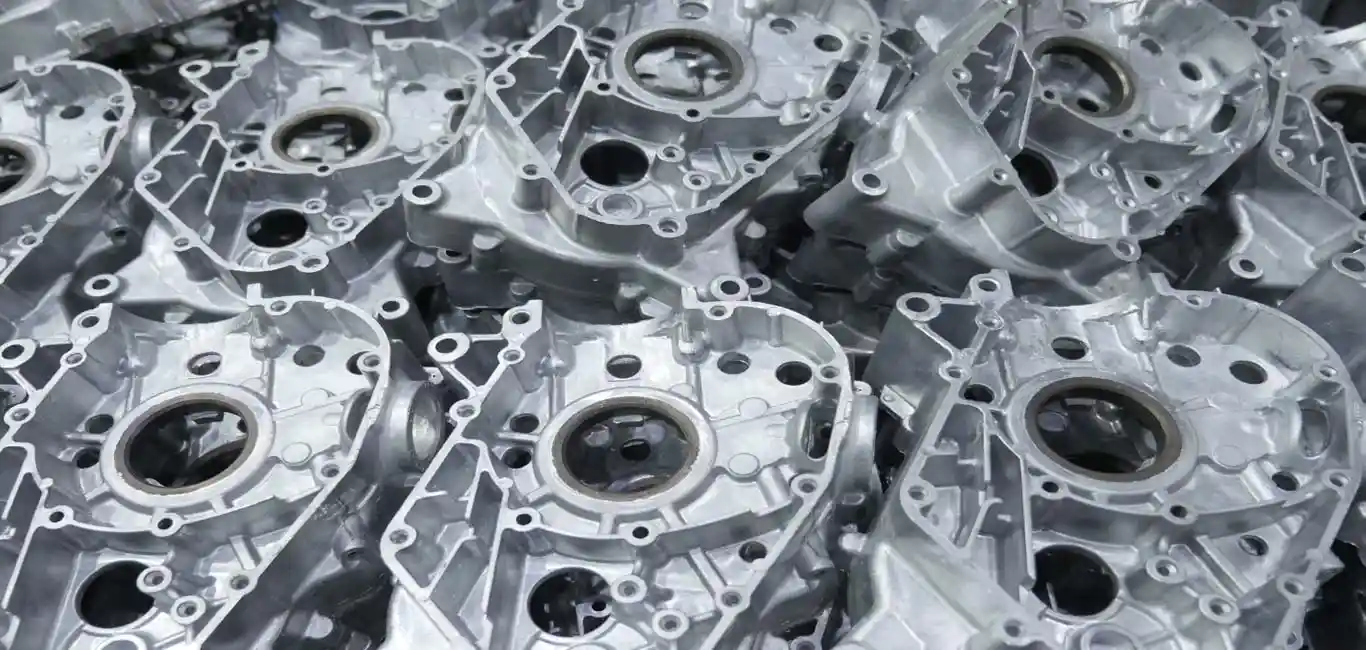
When contrasting casting techniques, die casting offers distinct benefits that deal with high-volume manufacturing needs and accurate engineering needs. This method allows the creation of complex geometries with limited tolerances, which is important for markets needing precise specs, such as auto and aerospace (Aluminum Foundry). Die spreading also results in superior surface area finishes, reducing the demand for considerable post-processing
The process is extremely efficient; molten steel is injected right into mold and mildews at high pressure, allowing for fast cycle times and increased production prices. This efficiency converts right into price financial savings, making die casting an affordable selection for massive production. On top of that, the durability of elements generated with die spreading ensures their durability and dependability in numerous applications. Ultimately, these benefits placement die casting as a leading alternative Aluminum Casting Company for projects focusing on high quality, efficiency, and precision in high-volume manufacturing circumstances.
Choosing the Right Method for Your Task
Just how can a project manager identify the most appropriate casting method for their certain demands? The decision between sand spreading and pass away casting copyrights on a number of crucial elements. The task manager must examine the necessary volume of components; pass away spreading is extra efficient for high-volume manufacturing, while sand casting fits low to modest quantities. Next, they should think about the complexity of the layout. Detailed geometries frequently favor die spreading due to its accuracy abilities, whereas sand casting permits higher flexibility in layout alterations.
Material residential properties additionally play a crucial function, as die casting usually produces more powerful elements with exceptional surface area finishes. Expense effects, including tooling and product costs, have to be examined; sand spreading usually provides lower preliminary expenses yet can be less effective in automation. Inevitably, the project supervisor should consider these aspects against job timelines, spending plan constraints, and high quality demands to pick the proper technique that straightens with the job's goals.
Frequently Asked Inquiries
What Kinds Of Aluminum Alloys Are Ideal for Sand and Pass Away Casting?
Various light weight aluminum alloys are appropriate for sand and die spreading, consisting of 356, 319, and 413 alloys. These options are favored for their superb castability, mechanical properties, and suitability for diverse applications in manufacturing.
How Do Production Prices Contrast In Between Sand Casting and Pass Away Casting?
Production prices for sand spreading are generally reduced as a result of simpler materials and arrangements. In comparison, die spreading involves higher first costs from tooling however uses cost financial savings with automation, making it much more affordable at bigger scales.
Can Both Approaches Produce Complex Geometries?
What Is the Common Lead Time for every Casting Technique?
Normally, sand spreading lead times vary from one to three weeks, affected by complexity and quantity. On the other hand, pass away casting usually supplies much faster production, with lead times frequently between one to two weeks, relying on style specs.
How Do Environmental Factors Affect Casting High Quality?
Environmental factors, consisting of moisture, dirt, and temperature degrees, considerably effect casting top quality. Variants can lead to problems such as porosity or surface blemishes, inevitably impacting the mechanical homes and performance of the final actors item.
When comparing sand casting and pass away casting for light weight aluminum projects, a number of vital aspects come right into play (Aluminum Foundry). Sand spreading is a widely used steel casting process that utilizes sand as the key mold material. Die casting is one more famous metal casting procedure that provides unique benefits contrasted to sand casting. The project supervisor need to assess the necessary volume of components; pass away spreading is much more efficient for high-volume manufacturing, while sand spreading suits reduced to moderate quantities. Both sand spreading and die casting can produce complicated geometries, though they accomplish this in various methods